Sent vs Twilio: Build messaging with automatic channel routing.
Send SMS, WhatsApp, and RCS through one API, with reusable templates and channel-aware contacts. Compare the workflow, then test one messaging flow alongside Twilio.
Start with $10 in free credits.
Test one messaging flow before moving production traffic.
20k+ active developers · 1B+ contacts reached
Compare the workflow behind every message
Both platforms support multichannel messaging. The useful comparison is how each handles the decisions and setup around a send.
| What matters |  | |
|---|---|---|
| Messaging API | One send interface for SMS, WhatsApp, and RCS. | Programmable Messaging supports SMS, MMS, RCS, and WhatsApp. |
| Route selection | Automatic selection uses recipient availability and account routing rules. | Messaging Services manage sender selection; channel behavior depends on the product and configuration. |
| Cross-channel fallback | Eligible automatic routes can try another channel; pinned sends do not cross-fallback. | RCS supports SMS/MMS fallback; Bulk Messaging supports configurable channel fallback. |
| Message templates | Reusable definitions with channel-specific rendering and approval states. | Content API and Template Builder manage cross-channel templates. |
| Recipient context | Channel availability and routing state live on the contact. | Messaging Services can retain sender-to-recipient mappings through Sticky Sender. |
| Sender registration | Channel setup includes sender and approval requirements. | A2P 10DLC registration is supported through Twilio’s registration workflow. |
| Delivery visibility | Dashboard, API, and webhook status tracking. | Message status callbacks and message records. |
7 comparison points
Compare costsCompare costs for your messaging pattern.
Your total depends on active contacts, message frequency, destination, and channel. Use these examples as a starting point.
Sent
$0.015 per active contact per billing period
One platform fee per billing period, plus message delivery at cost. Repeat messages do not add another platform fee.
Twilio
Usage per SMS segment
Each message carries two costs: Twilio’s per-message markup and the applicable carrier fees (e.g. AT&T). You pay both on every message.
| Contacts / messages | | Illustrative savings | |
|---|---|---|---|
| 100K contacts300,000 messages | $3,090Illustrative total | $3,480Illustrative total | −$390 |
| 500K contacts1,500,000 messages | $15,450Illustrative total | $17,400Illustrative total | −$1,950 |
| 1M contacts3,000,000 messages | $30,900Illustrative total | $34,800Illustrative total | −$3,900 |
Team sample: 100,000 contacts × 3 single-segment US SMS → Sent $3,090 / Twilio $3,480. Small, unmatched observed samples: Sent 380 messages; Twilio 5. Excludes number, registration and negotiated rates. Illustrative, not a quote.
Try Sent with your own messaging flow.
Start with $10 in free credits.
Let the message find its channel
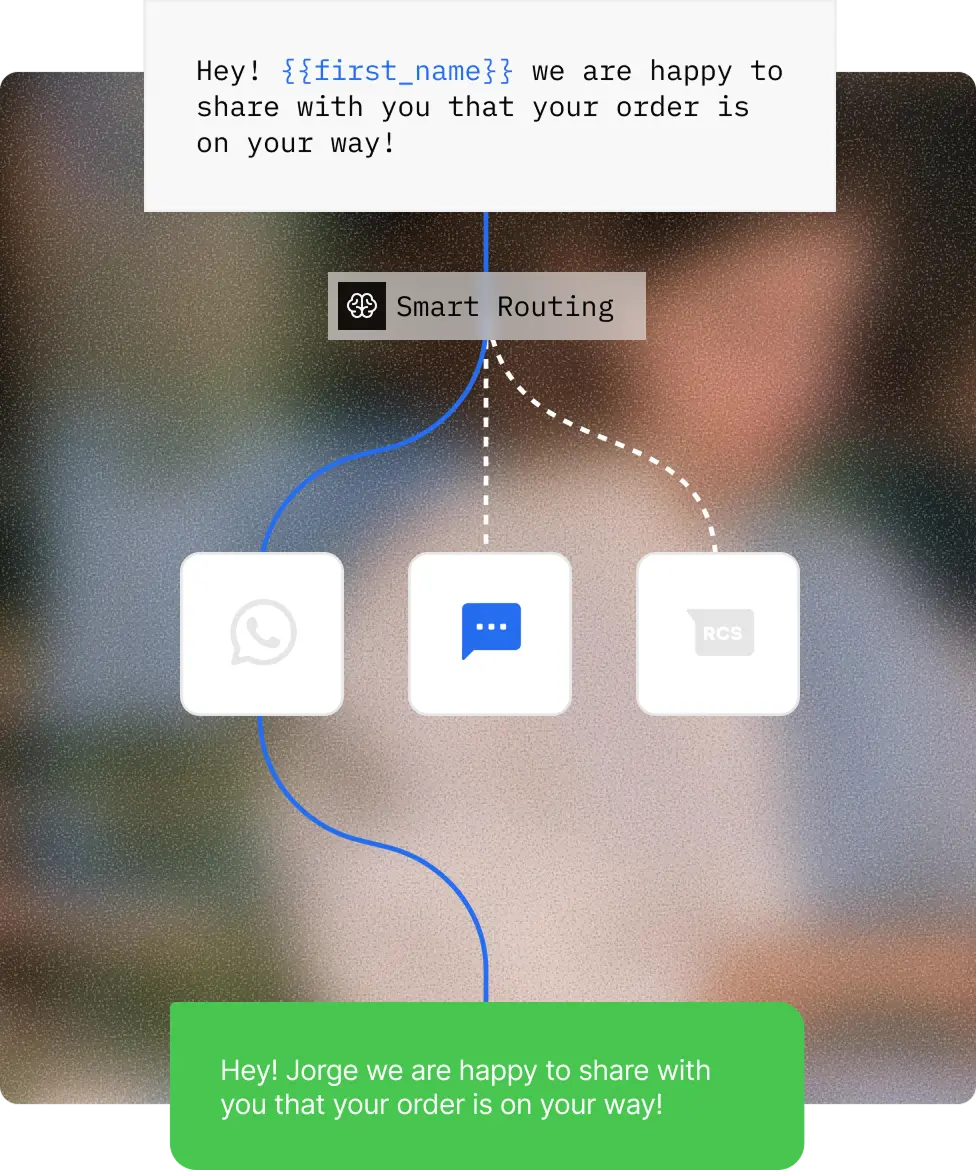
Routes messages to the best available channel, transforms templates for that channel, and respects configured quiet hours. Leave the channel unpinned to use automatic routing.
Twilio: You configure channels and senders. Messaging Services can automatically fall back from RCS to SMS/MMS.
Build customer messaging into your product
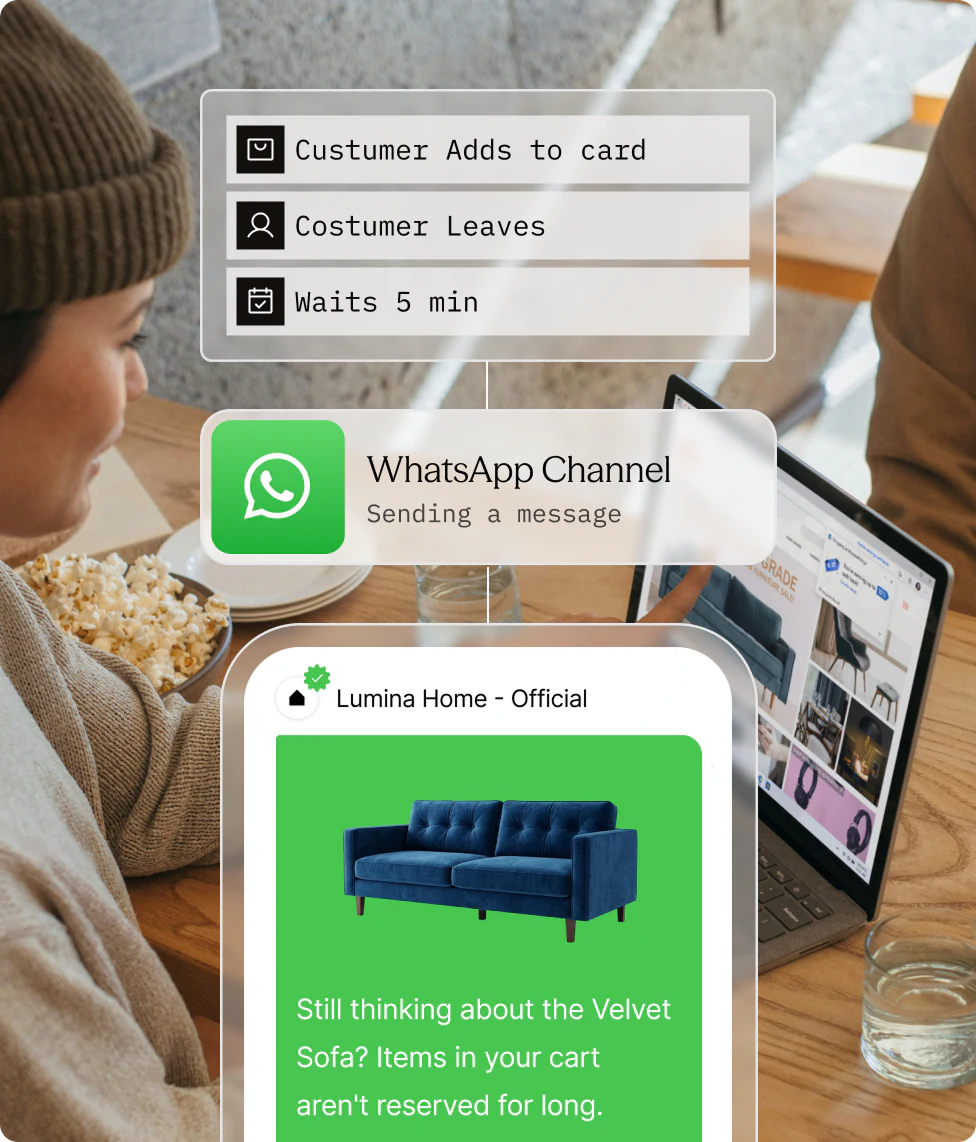
Create a Sender Profile within your organization; send for that customer by passing its profile ID.
Twilio: Create a subaccount and configure its messaging resources; send through that customer’s account SID.
Before you switch
Yes. Start with one flow, such as verification codes or order updates. Keep your existing integration running while you compare delivery and cost, then move additional traffic when you are ready.
Create a Sent account and integrate the Sent API or SDK for the flow you want to test. Configure its recipient and template, and connect delivery tracking. Start with the quickstart.
Start with $10 in free credits to evaluate Sent before expanding your usage.
No. Sent’s platform fee is charged once per active contact per billing period. Whether the total is lower depends on message frequency, delivery rates, and your existing commercial terms. The sample above sends three messages to each contact in a billing period. If most of your contacts hear from you only once, pricing per message can cost less. The estimator on the pricing page works it out for your own mix.
On Sent, each customer you send for is a Sender Profile inside your own organization, and you send on their behalf by passing that profile’s ID. On Twilio, each customer is a subaccount with its own messaging resources, and you send through that customer’s account SID.
Yes. Sender registration, such as A2P 10DLC in the US, WhatsApp business verification and template approvals, is decided by the carriers and by Meta, whichever platform you send through. We run the submissions with you and tell you where each one stands, but the review itself belongs to them.
Test Sent alongside Twilio.
Start with one flow and $10 in free credits. Expand after comparing delivery and cost.